
Marion Resident Lookup Records
A Marion resident lookup works best as a verification trail. The county Auditor, Recorder, court divisions, local registrar, library, and Ohio voter system hold separate record series. Each result should be read inside its boundary. A recorded owner is not automatically an occupant, and a document party is not automatically a current address.
| Record | What It Confirms | Where | Access |
|---|---|---|---|
| Auditor property roll | Recorded owner, situs, parcel, and transfer clues | Marion County Auditor property search | Owner, address, or parcel search |
| Recorder index | Recorded instrument party and date | Marion Recorder AVA | Party, date, document, address/legal, or parcel index |
| Voter lookup | Selected person's registration and precinct information | Ohio or Marion voter lookup | First name, last name, and county required |
| Court docket or file | Public party role, case number, and filing events | Correct court division or clerk | Restricted matters excluded |
| Vital or obituary source | Birth, death, marriage, or life-endpoint clue | Marion Public Health and library holdings | Certificates and historical finding channels differ |
| Probate papers | Estate, fiduciary, or heir trail when public | Family/Probate court or clerk | Document visibility varies |
Use the Auditor when a property is known, voter lookup for an identified elector, and the correct court division when a case is already suspected. Marion's records are not one combined name database.
Verify One Marion Resident
Begin with a name plus Marion and seek two independent record types. Compare middle initial, name order, prior address, parcel or legal description, court case number, timeframe, and a published directory year when lawfully available. A shared last name or an owner and voter with similar names should never be merged without another matching fact.
- Search the Marion County Auditor Property Search by owner in Last First format when property ownership is the starting fact. Save only the displayed parcel, owner, mailing, and situs information.
- Compare the property clue against the Recorder AVA index using a narrow party, date, document, address/legal, or parcel search.
- If registration information is relevant, run the selected person's name through the Ohio voter form and record the exact spelling and date searched.
- Use the appropriate court division or historical source only after the matching timeframe or case role is clear. Request a copy from its custodian if the result needs proof.
- Docket
- A court's running list of events in a case, such as filing, hearing, order, and status. It is not a full biography of a party.
- Index and image
- An index helps locate a record by fields such as party or date. An image is the underlying scanned document when the custodian makes it available.
- Certified copy
- A copy issued or certified by the office that holds the original record. It is different from a search-screen result or an informal transcription.
Keep the custodian URL, date searched, exact name form, and whether a finding was index-only or document-confirmed. That small record trail helps prevent a same-name error.
Marion Resident Lookup Owner Limits
The Auditor accepts an owner name in Last First format and also supports address and parcel paths. A property card can show the recorded owner, situs, parcel, transfer clues, and a tax mailing field if displayed. The Recorder AVA index can then connect a party to a recorded land instrument and date. Neither record converts an ownership fact into proof that a person currently lives at the property.
Myth: A tax-roll mailing address or recorded owner identifies every current occupant. It may instead be a correspondence location, agent, trustee, business address, or another property. Treat it as the record labels it, then seek a second, independent source before drawing a personal conclusion.
Recorder results need the same care. The public index has party, date, document, address/legal, parcel, subdivision, municipality, and tract criteria, but its public notice does not state a remote start year. Certified copies require an in-person visit or a written paid request through the Recorder, not an assumption that every document image is available remotely.
Note: A parcel, tax mailing field, and recorded party can confirm different facts, so keep each label attached to its source.
Marion Court Lookup by Division
Choose the court before looking for a case. Common Pleas General Division handles county civil, criminal, foreclosure, and related matters through the Clerk Legal Division. Family/Probate has a separate eServices endpoint for records search and e-filing. Marion Municipal Court has civil and traffic functions, but research did not confirm an official public name-search URL. Ask the Municipal Court clerk for its official docket or copy path instead of relying on an unverified result.
Marion Family/Probate eServices is the official records-search and e-filing endpoint.
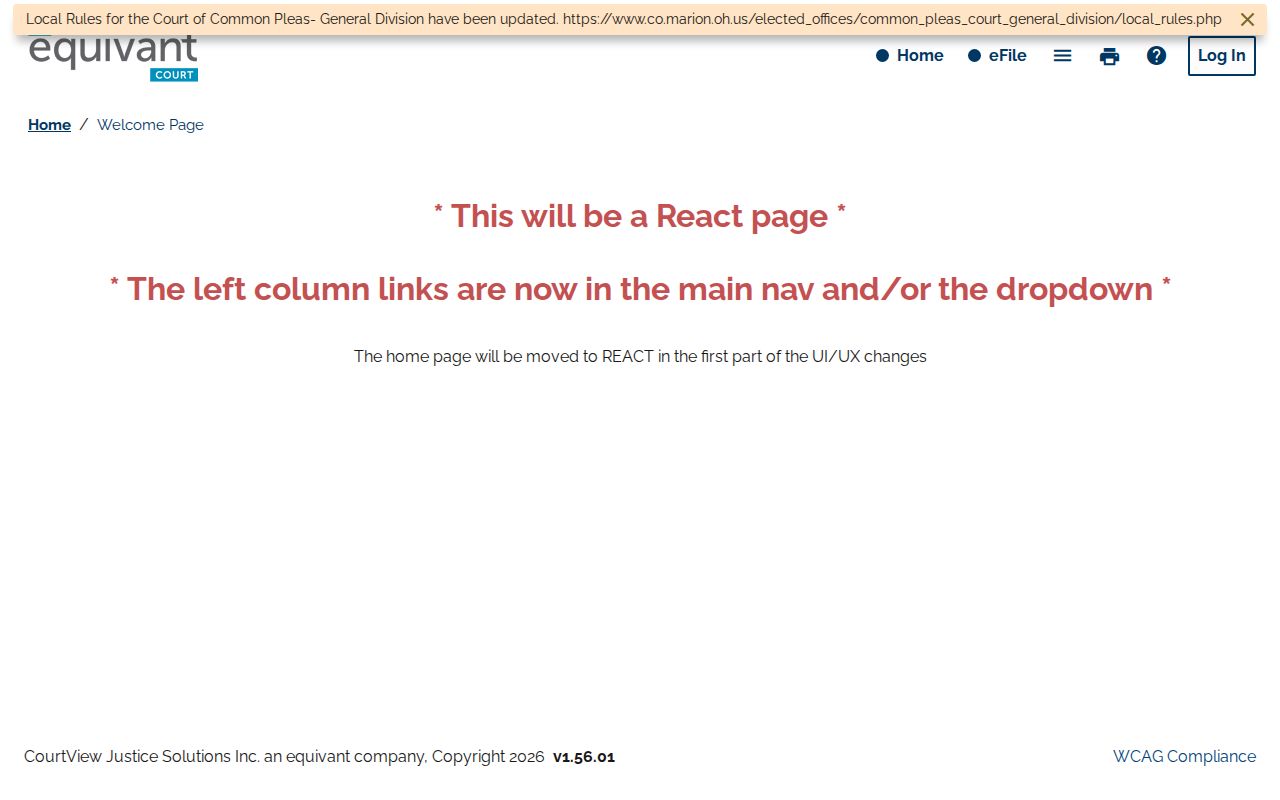
The endpoint requires JavaScript, cookies, browser information, and a generated session before its form is served. Its visible fields, coverage date, result limits, and sample docket were not verified, so a portal-specific field list would be inaccurate.
The Clerk Legal Division provides the offline route at 100 N. Main St., Marion, OH 43302, 740-223-4270. Requests may be made by phone, mail, email, or in person. Give name variants, case number if known, division, document type, approximate filing date, desired copy type, and a delivery method. Older files, exhibits, certifications, and redaction review can require counter or written-request work.
Marion Resident Lookup Docket Clues
A public docket normally identifies a case number, caption or party names, case type, filed date, event entries, hearing dates, public orders or judgments, and a public disposition or status. That inventory describes the type of record to request, not a promise that every Marion court portal displays each field. Juvenile, adoption, sealed, expunged, medical, personal-identifier, and restricted material may be unavailable.
| Case number | The court's identifier for the case, used when requesting a file or copy. |
|---|---|
| Caption or parties | The publicly displayed case name or party names where the record is open. |
| Case type and filed date | The record category and date that help distinguish same-name cases. |
| Docket events | Public filing, hearing, order, or judgment entries listed by date. |
| Status or disposition | A public outcome or current status, if the court makes it visible. |
The Ohio Supreme Court public docket is a separate state-level source for Supreme Court cases from 1985 onward.
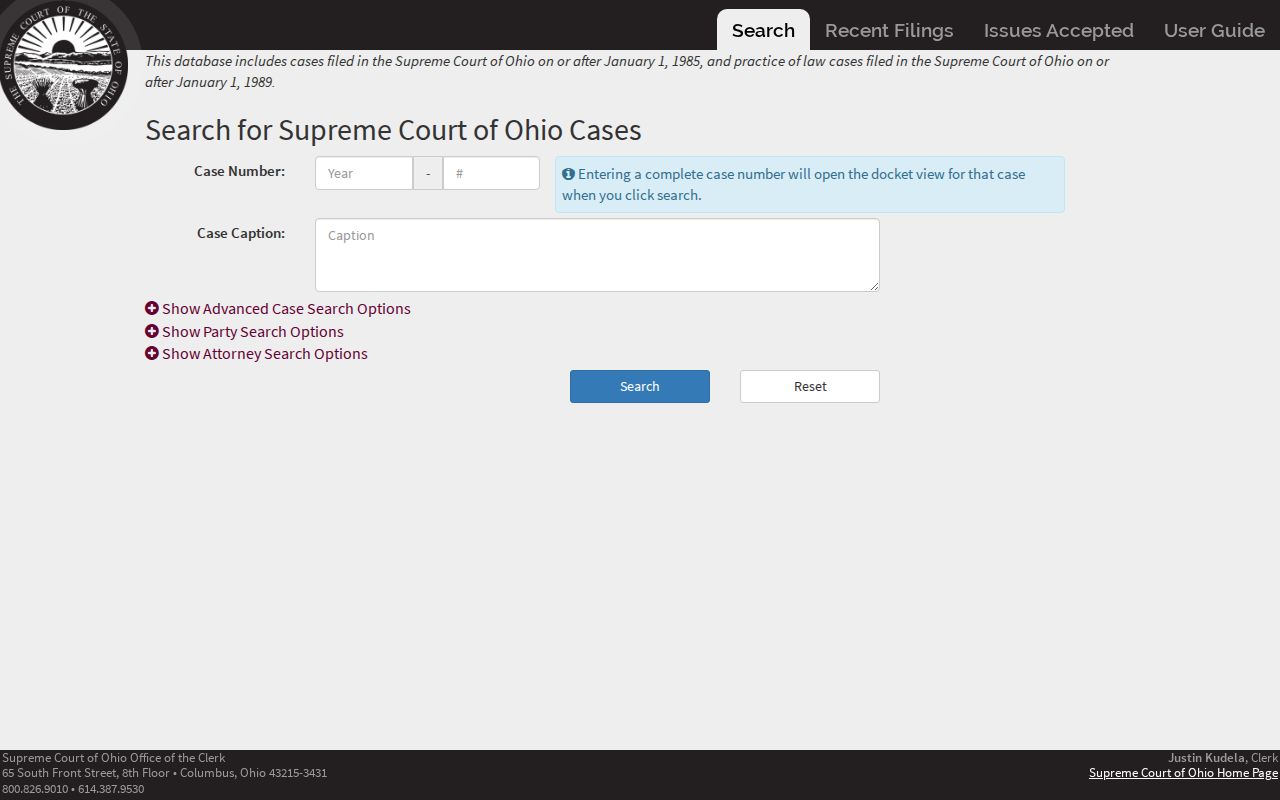
Its case, caption, party, and attorney pathways are not a statewide trial-court search. Marion trial files remain with their local court or clerk.
Note: A public docket event can locate a court record, but it should not be used to infer private facts outside the public file.
Marion Voter Lookup Boundaries
Ohio's voter form is for an identified person, not for browsing a block. It requires first name, last name, and county. Search tips advise trying a derivative first name, a former last name, accurate information, and a previous Ohio address. Marion has a county-branded endpoint, but the statutory access limits remain the same.
R.C. 3503.153 makes specified public fields available through the state system, including name, birth date, current residence address, precinct number, registration date, voting history, and last activity date, except protected or confidential records. Voting history concerns participation in elections, never ballot choices. Ohio does not register voters by party.
Myth: A no-result lets a researcher browse other voters on the same street. The voter interface supports the selected person and county. Confidential voter registrations, Safe at Home addresses, and designated-worker redactions are outside ordinary results. Use the Marion voter lookup for the selected-person route.
Marion Resident Lookup Vital Records
Marion Public Health Vital Statistics is the local registrar at 181 S. Main St. It holds Marion birth certificates from 1908 and Marion County death certificates from 1954 to the present, while participating in statewide Ohio issuance. Walk-in certificate hours are Monday through Friday, 8:00-4:30. The current local fee is $25 for each birth or death copy.
Marion Public Health's birth and death certificate instructions set out the local certificate procedures.
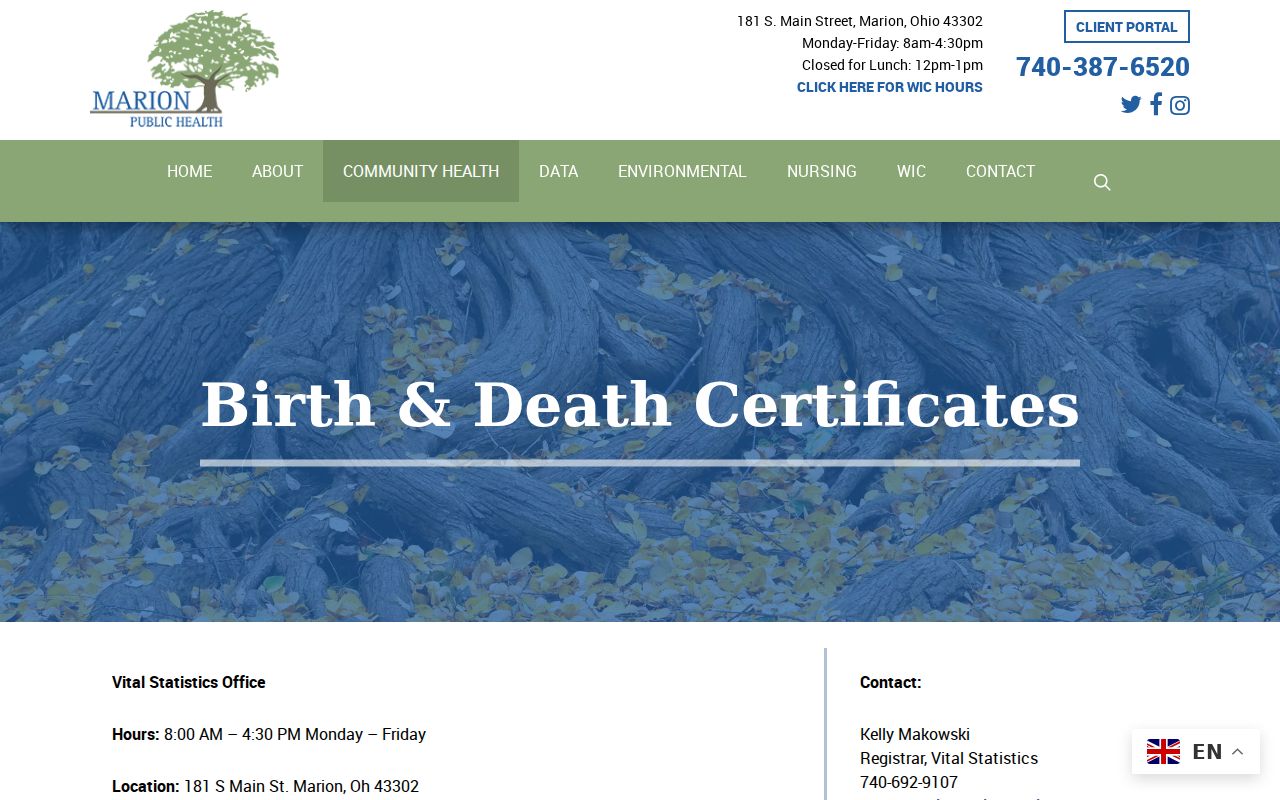
Walk-in payment methods include cash, money order or cashier's check, and card with the stated card charge. The agency does not accept ordinary mail orders for certificates. Online orders use VitalChek and add that service's fee.
Ohio's R.C. 3705.23 uses a signed-application and fee model, with statutory restrictions. Sealed adoption records use the state Office of Vital Statistics route. Death-certificate SSNs are omitted for the first five years except for authorized requestors. A library microfilm lead can support historical discovery, but a certified copy comes from the custodian.
Marion Resident Lookup Heir Trail
An heir question has a local sequence. Begin with Probate estate docket or public papers, then compare the result with the library's obituary cards or Marion Star microfilm and a recorded fiduciary or property transfer. Probate can identify a fiduciary, heir or next of kin, notices, addresses, and assets when those documents are public, but visibility varies by record.
Marion County's Family Division instructions illustrate that Probate and Family records are handled through a distinct court channel.
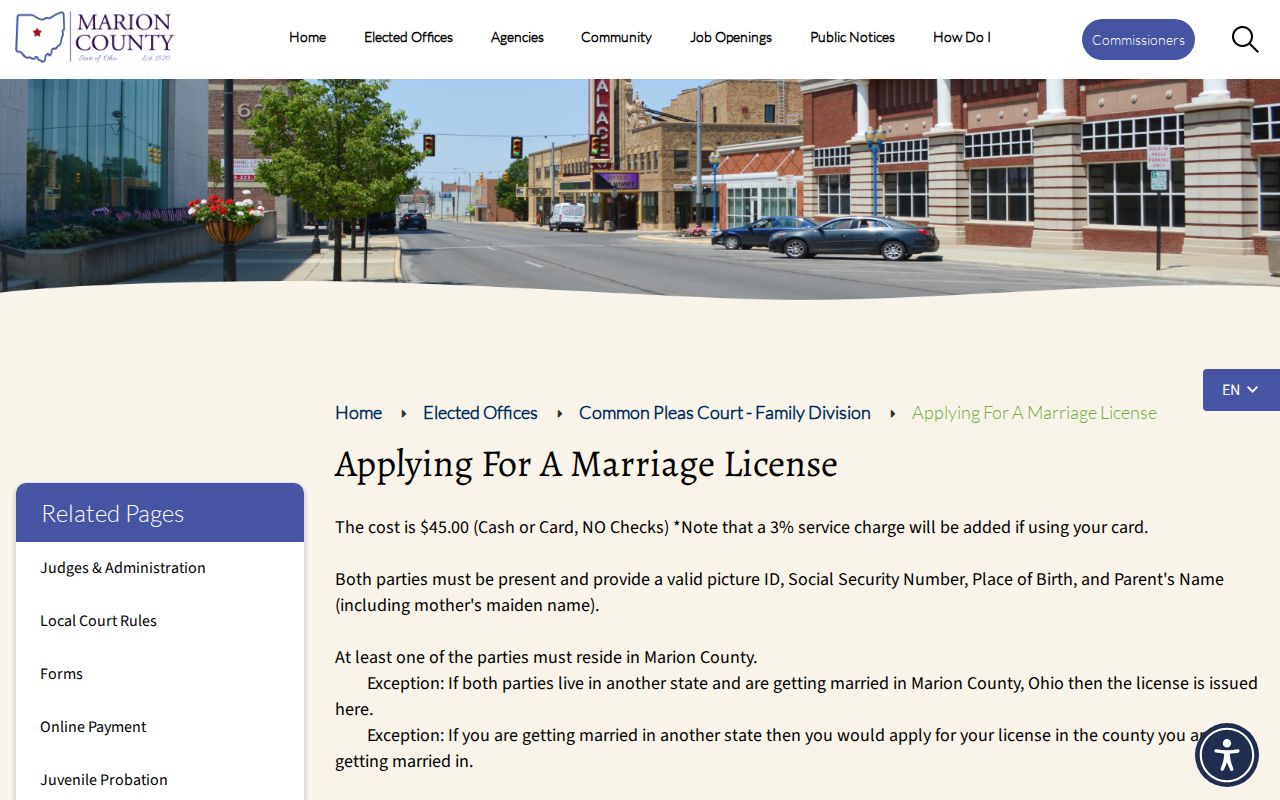
Use the court division and a known record type rather than treating a marriage, estate, and court case as one interchangeable name search.
The library's obituary cards cover 1985-2009, and the Marion Star microfilm reaches 1878-2019. They can help establish a date or notice trail. They do not replace a court file, certificate, or recorded transfer.
Marion Resident Lookup Privacy Limits
Ohio Public Records Act access under R.C. 149.43 applies to nonexempt records, not every personal detail. R.C. 3503.13 excludes voter SSNs, driver-license or state-ID numbers, telephone numbers, email, proof of citizenship, confidential voter registration, protected-worker addresses, and other closed fields. The federal Driver's Privacy Protection Act also protects motor-vehicle personal information.
Safe at Home Ohio, authorized by R.C. 111.41-.47, provides a substitute-address route for eligible survivors. A missing voter address can reflect lawful confidentiality rather than a database error. For a correction, ask the custodian that holds the record: Auditor for assessment data, Recorder for recorded-document procedures, Board of Elections for registration, court clerk for docket or case correction, and the registrar or court for a vital amendment.
Note: A narrowly described request for a known record is more useful and more respectful of protected information than a broad name request.