
Find Marion Residents by Clue
Use the most exact detail first. An address belongs in the Marion County Auditor search, while a recorded land question belongs with the Recorder. A name can be checked against an owner field, a selected voter record, a court case by the right division, or a dated library volume. Each result has a different weight. A parcel record can connect an address to land. A directory can place a printed name at an address in a particular year. Neither source alone proves a whole current household.
Start slowly when names repeat. Keep the spelling used by each custodian, the date searched, and the identifier that led to the next source. The strongest Marion residents directory trail joins two independent records before drawing a conclusion. A legal description or parcel PIN is often more reliable than a familiar street form when the work moves between the Auditor and Recorder.
- Search the Auditor by address, parcel, or owner name in its required Last First format.
- Save the situs address, parcel PIN, transfer clue, and legal-description wording displayed on the property card.
- Use the Recorder index to test the owner, document date, and legal description against a recorded instrument.
- For an identified voter, use the Ohio form with first name, last name, and county rather than treating it as a block browse.
- For an earlier household, compare the nearest dated directory or phonebook volume with newspapers, obituaries, probate, or deed evidence.
Note: An owner field, tax mailing address, or one directory entry is a useful lead, not a complete list of everyone at a Marion address.
Marion Resident Record Desks
Marion is the county seat, so several key custodians are in the city but keep different kinds of evidence. The Recorder handles recorded instruments. The Auditor ties owner and location data to a parcel. The Clerk handles court records and requests. Marion Public Library preserves the locally useful historical shelf. Choose the office from the question, then give it a specific name, date, address, parcel, or case reference.
Marion County Recorder
222 W. Center St., lower level
Marion, OH 43302
740-223-4100
Ohio Voter Search
State form with a Marion County option
First name, last name, and county
County-specific route available
The address-keyed chain is developed in the Marion street directory. Historical volumes have their own custody and year-by-year limits, so the more detailed shelf work belongs with the city-directory collections.
Marion Property Search Fields
The Auditor is Marion's most direct current property starting point. Its global field accepts a parcel, owner, or address. Separate routes accept owner name as Last First, parcel number, and address components. That last option is deliberately structured. A house number, directional abbreviation, street name, and street-type abbreviation can matter when a street has a directional form.
| Auditor field | Best Marion use | Format or limit |
|---|---|---|
| Owner Name | Recorded-owner lead | Last First |
| Parcel Number | Return to an identified property | Parcel or PIN route |
| House # and street fields | Find a situs address | Direction and type abbreviations matter |
| Sale filters | Narrow a transfer period | Date, price, buyer, seller, valid sale |
| Location filters | Describe property geography | Tax district, township, school district, neighborhood |
The interface does not offer ZIP as an advanced search filter. Use the exact address and parcel record for Marion property work, then use USPS and GIS separately for postal and municipal-boundary questions.
Marion Situs and Mailing Records
A Marion property card has more than one address-like fact. The situs is the physical location of the parcel. A tax mailing field is where correspondence is sent. It may be a post-office box, an agent, a business, or another property. Calling that mailing field a present home address creates a false resident trail.
Preserve the legal description too. A lot, subdivision, survey, or other legal-description fragment is the durable key for a deed path when an old street form is incomplete or the parcel is part of a larger transfer. The county GIS service also exposes useful context, including parcel boundaries, roads, corporations, townships, hydrology, and survey-system layers. Those layers help distinguish location from mailing information.
- Parcel or PIN
- The county identifier for a property record and map feature.
- Situs address
- The physical street location used to locate land.
- Mailing address
- A correspondence address supplied to a tax record, not proof of occupancy.
- Legal description
- The lot, subdivision, plat, or survey wording that identifies land in recorded documents.
Marion Parcel-to-Deed Trail
The Recorder's AVA index turns an Auditor clue into an instrument trail. Its basic search includes party, date range, document number, document type, book, page, and reference number. Its advanced routes include address, subdivision, parcel, municipality, and tract criteria. That range is valuable when a common name produces unrelated documents.
Record the document number, document type, recorded date, parties, and legal information shown in a result. Then compare the current transfer with the prior acquisition by the same legal description. A grantor is the party transferring an interest; a grantee is the party receiving one. The public index helps identify the path, but image availability can vary, and the Recorder says copies or certified copies require an in-person visit or a written paid request.
Note: The Recorder has not published a first year for its remote index, so an older Marion search may require historic books, the counter, or a written request.
Current Marion Resident Directories
There is no single current roll of Marion households. The useful sources are narrower and should be read according to their scope. A property record identifies a recorded owner and parcel. A voter search confirms registration details for a selected person where public. A Recorder record identifies parties to an instrument. Court, probate, business, and licensing records answer still different questions and often need a known name or case context.
| Marion source | What it can support | Custodian | Access boundary |
|---|---|---|---|
| Property roll | Owner, situs, parcel, transfer clues | County Auditor | Owner is not automatically an occupant |
| Recorder index | Recorded-document party and date | County Recorder | Confirm through the document or custodian |
| Voter lookup | Selected elector registration route | Ohio and county elections | No unrestricted street browsing |
| Court or probate file | Party role, case date, estate clue | Clerk or court division | Restricted filings remain closed |
| Library directories | Dated address and business evidence | Marion Public Library | Collection and publisher formats vary |
For a question centered on one person rather than an address, the resident lookup route should compare independent records before treating two similarly named results as one individual.
Marion Voter Lookup Limits
Ohio's voter form asks for first name, last name, and county, and all three are required. Search tips direct users to try derivative first names, former last names, accurate details, and a previous Ohio address. A result may ask the searcher to narrow by street name. That is a check for an identified elector, not a browseable list of every name on a Marion street.
Ohio law makes specified registration information public while withholding Social Security, driver-license and state-ID data, telephone, email, confidential-voter information, and protected-worker address data. Voting history concerns participation, never ballot choices. The Board also keeps precinct registration lists for inspection subject to the timing and protected-record rules in state law. Treat a missing listing as a possible privacy boundary rather than a reason to seek a different source for protected data.
Marion Court Lookup Divisions
A court name search starts by identifying the court layer. Common Pleas General Division handles county civil, criminal, foreclosure, and related trial matters. Family Division includes juvenile, domestic or family, and Probate functions. Marion Municipal Court has separate civil and traffic functions. The Marion County Family and Probate eServices endpoint is an official gateway for e-filing and record search, but its live form requires a JavaScript session, so its unverified form fields should not be guessed.
Use a party name, known case number, court division, approximate filing date, and desired document type when asking a clerk for a record. A public docket can contain a case number, caption, type, filed date, events, hearing dates, orders, and a status when public. It does not make sealed, expunged, juvenile, adoption, medical, or otherwise restricted material available. A case reference can supply a dated lead, then should be checked against the matching property, deed, obituary, or directory evidence.
Marion Records Request Routes
When a local index ends, request a defined record from the custodian. The Clerk Legal Division accepts phone, mail, email, and in-person public-record requests at 100 N. Main St., second floor, Marion, OH 43302, 740-223-4270. Give the party name variants, case number when known, division, document type, date range, and whether inspection, an ordinary copy, or a certified copy is needed. Older files and redaction review can take longer.
The Clerk's request policy explains the county channel. City Council's optional form separately supports a narrowly described municipal request by record type and time period. It permits office pickup, email, mail, fax, in-person inspection, or response by the preferred contact method. City permit questions should use the certified address or PID, not merely a mailing address.
The City of Marion forms directory is a useful starting point for Council, police, safety, zoning, utility, parks, and public-works forms.
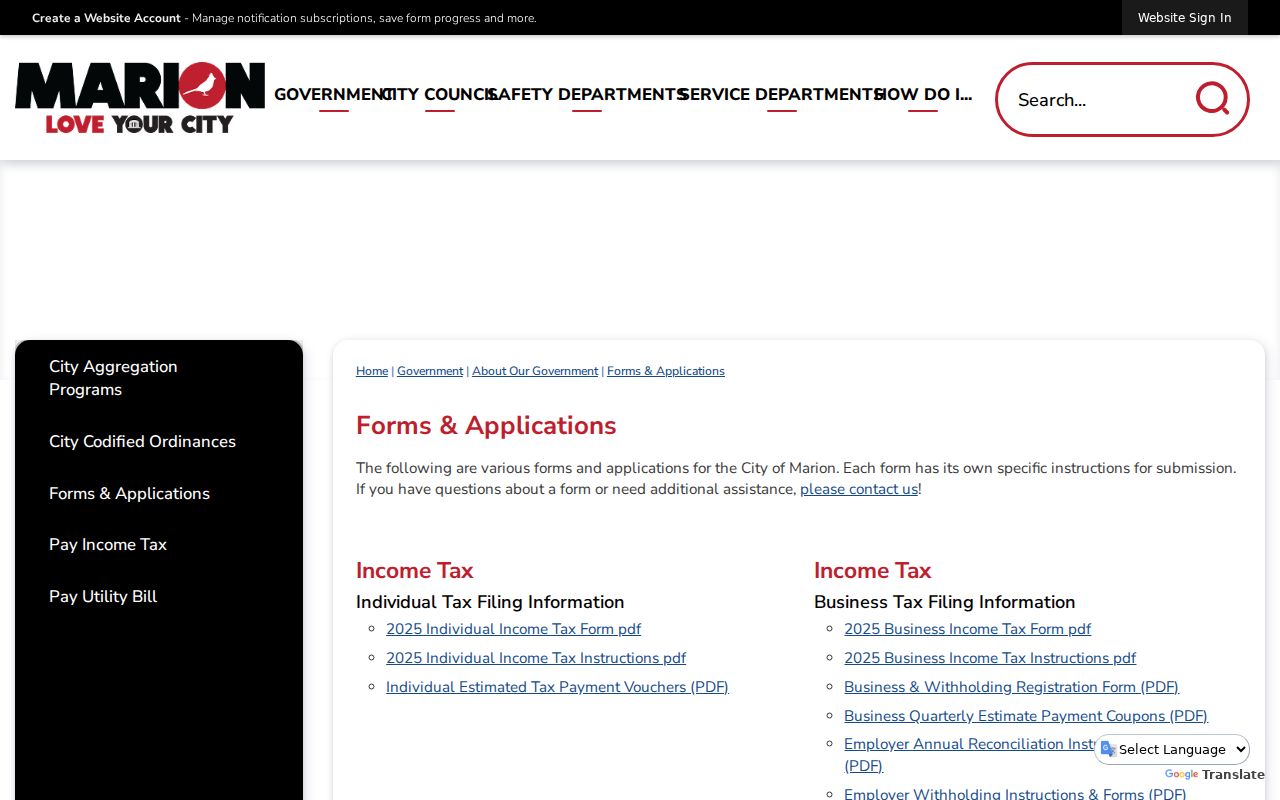
A specific date, permit number, parcel, or address helps route a municipal record request to the correct Marion office.
Protected Marion Resident Records
Public records are not a permission slip to assemble private household data. Safe at Home Ohio provides qualifying survivors with a substitute address for voter registration, government correspondence, and other official uses. Ohio also provides redaction pathways for eligible public safety professionals and families. Voter records exclude confidential registrations and properly protected addresses.
Safe at Home Ohio is the official program route. BMV personal information, utility and delivery records, juvenile matters, adoption material, sealed filings, and many personal identifiers have separate protections. A missing name or address can reflect one of those rules. Verify a needed record through its proper custodian rather than trying to work around a confidentiality decision.
Lawful personal use. Marion records can support family history, estate questions, civic research, and safety checks. Do not use them to stalk, harass, threaten, or harm anyone.
Marion Library’s Evidence Shelf
Marion Public Library's Local History Room supplies the historical channel that online property and court interfaces cannot replace. Its Family Ties guide documents directories and phonebooks from 1915 through 2022 in paper and microfilm. It also identifies obituary cards for 1985 through 2009, Marion Star microfilm from October 8, 1878 through December 2019, local yearbooks, newspapers, family histories, cemetery material, and vital-record microfilm.
The shelf must be read volume by volume. Directories are organized chronologically and by publishers including Polk, Dickman, Robinson, Yellowpages, and others. The guide confirms names, residents or businesses, addresses, and business type where present. It does not promise that every year is complete, digitized, alphabetical, or a reverse directory. Marion County Historical Society and the Marion Area Genealogy Society at Heritage Hall are additional local research channels when staff availability and collection access allow.
Note: A gap in a directory run shows a gap in available volume coverage, not proof that a Marion household moved.
Historical Marion Resident Directories
For an older Marion address, date matters as much as the name. Local research leads include an 1860 business-directory transcription, selected city-directory years from 1901 through 1936, and the Farm Journal Illustrated Directory of Marion County for 1918 through 1923. Those are distinct leads from the library's documented 1915 to 2022 shelf run.
Pair a printed address with adjacent directory years, then test it against the parcel record, Recorder transfer, newspaper, obituary, census, or probate material appropriate to the period. The full collection list, physical access choices, and careful entry-reading method are preserved in the Marion city directory collections. A city directory can date a printed address; it does not prove an unlisted person was absent.
Marion Same-Name Record Check
A common surname needs a second anchor. Compare middle initials, name order, prior address, parcel or legal description, recorded date, court case number, and the year of a printed directory. Preserve the custodian URL and whether the result was index-only or document-confirmed. A property owner and a voter with a similar name in the same city are not automatically the same person.
For an heir question, begin with the Probate estate path, then compare obituary cards or newspapers with a fiduciary or recorded transfer. For a former classmate, a Quiver yearbook entry can provide a dated school clue, then directories and newspapers may test the name. An official adoption or original-birth-record question belongs with the Ohio Department of Health process, not a general resident search. Each path can end when a record is confidential or not digitized.
Marion Public-Safety Record Scope
Public-safety indexes have limited purposes and should not be used as household rolls. The Sheriff links a public portal for agency-public information, while the statewide DRC search is a custody locator with separate coverage. A result from either channel does not establish a current residence or a complete personal history. Court disposition still belongs with the relevant court record, subject to sealing and other restrictions.
Marion Sheriff's public requests may be oral, written, or submitted through the agency's online route, but the request must identify the record clearly enough to locate it.
The Marion County Sheriff public portal is the official public entry point shown here.
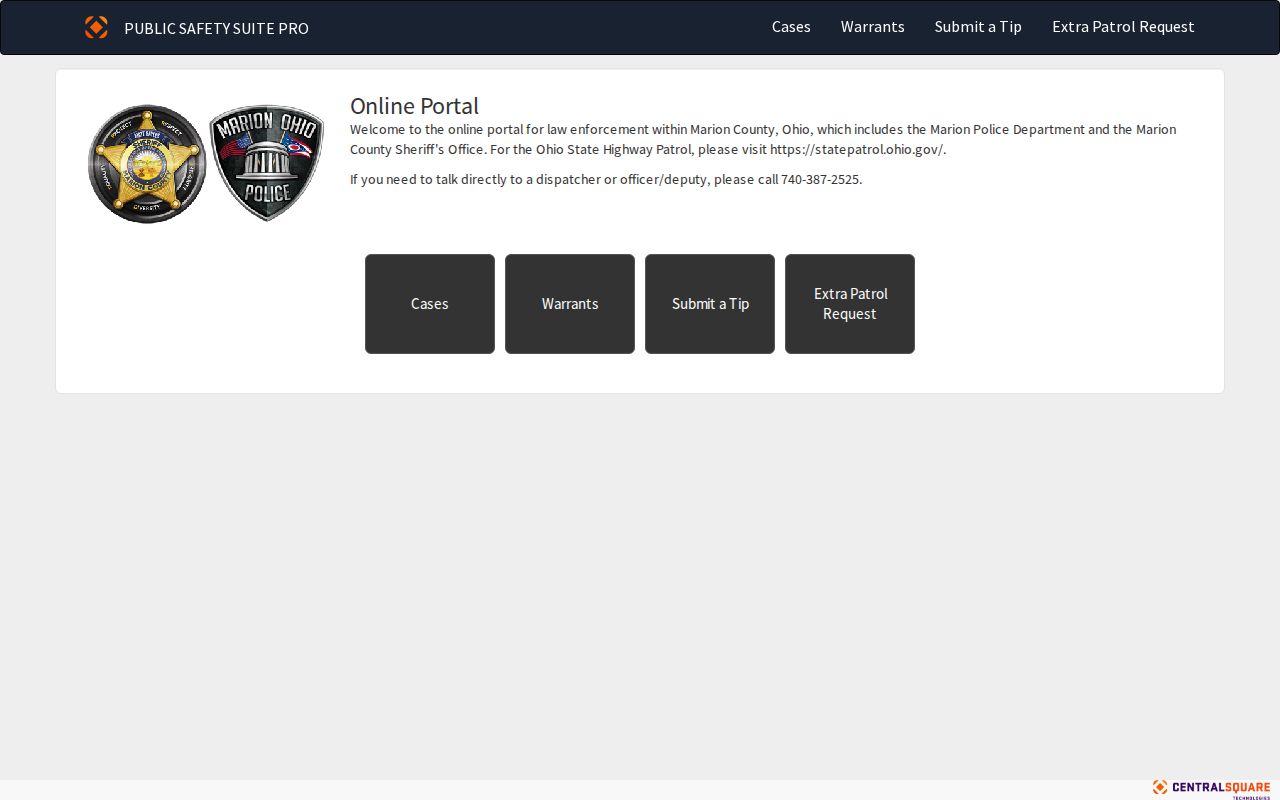
Use an incident, report, date, or agency reference to distinguish a defined Sheriff request from a broad name search.
Ohio DRC Offender Search is a separate statewide custody resource.
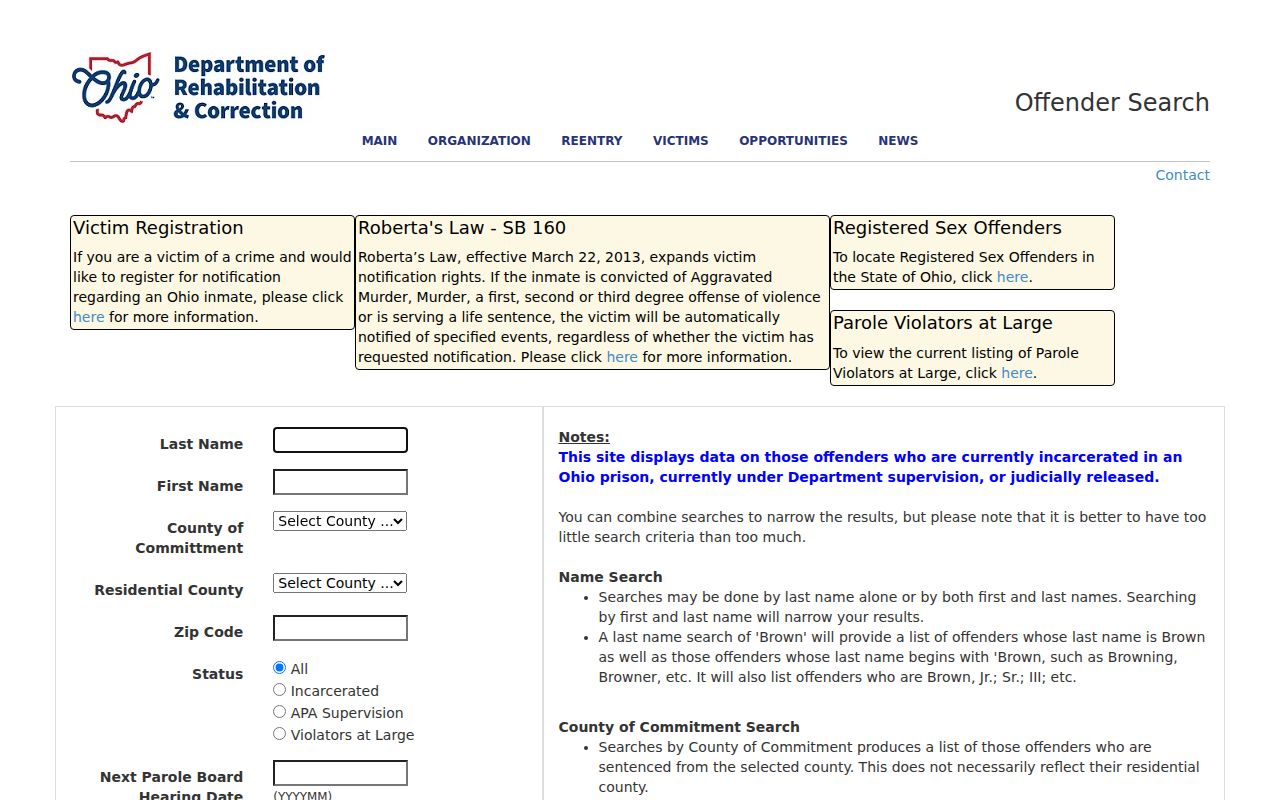
The DRC screen has a statewide institutional scope, so it cannot replace Marion property, directory, or court verification.
Marion Public Records Fallback
Ohio's Public Records Act, R.C. 149.43, gives any person a route to nonexempt records held by a public office. A request does not need a special form, an Ohio address, or a stated purpose. It does need a description clear enough for the office to identify the records. Inspection cannot be charged merely because a person reviews records, though actual copying or media costs can apply and a complex review can take reasonable time.
Ohio's Public Records Act guidance is the statewide reference for that fallback.
Use the law to request a defined Marion record from its custodian, while respecting every statutory exception and court-ordered restriction.
The Marion County Clerk public-record request policy illustrates the local request channel.
A complete request identifies the custodian and the particular case, parcel, record type, or time period that connects to the Marion research question.